Imagine a university transcript that looked like this:
Thermodynamics — A Organisational Behaviour — B+ Financial Accounting — A− Science of Happiness — A
That last line would, for many people, produce an immediate reaction. Something between amusement and discomfort. A vague sense that it doesn’t quite belong there — that happiness is personal, subjective, perhaps admirable as a pursuit but surely not an academic subject. Not something that belongs in the same column as thermodynamics.
This reaction is worth examining. Because it reveals something important not just about how we think about universities, but about how we think about what a human life is for.
Modern universities are built on an assumption so deep it is almost invisible: that the purpose of higher education is to produce competent professionals. To transfer knowledge, develop technical skills, and credential graduates for the labour market.
This assumption is not wrong, exactly. Universities do need to prepare people for careers. Economic participation matters. The skills a university teaches have real consequences for real lives.
But it is radically incomplete.
Because graduates do not only enter professions. They enter lives. They form relationships, raise children, navigate loss, face failure, experience illness, search for meaning, confront mortality, and attempt — as every human being attempts — to construct something that feels, at the end of a day or a decade, like it was worth it.
And for all of that — for the vast, irreducible business of being a person — virtually nothing in the standard university curriculum provides any preparation whatsoever.
We teach differential equations. We do not teach how to sit with uncertainty.
We teach contract law. We do not teach how to repair a damaged relationship.
We teach macroeconomics. We do not teach how to find meaning when achievement feels empty.
We teach students to analyse systems. We do not teach them to understand the system they are living in — their own mind.
This is not a minor oversight. It is a structural failure of vision — a failure to take seriously the question that every educational tradition in human history, before ours, placed at its centre: what does it mean to live well?
Before making the case for happiness as a core university subject, it is necessary to be precise about what that means — because the word “happiness” carries significant cultural baggage that obscures what the field actually involves.
Happiness science is not positive thinking. It is not motivational speaking. It is not a curriculum of affirmations and gratitude journals.
It is a rigorous, empirically grounded academic discipline — drawing from neuroscience, psychology, philosophy, economics, and sociology — that studies the conditions under which human beings genuinely flourish. What produces lasting wellbeing, as distinct from transient pleasure. What enables people to build resilient, meaningful, connected lives. How emotions work, how attention operates, how habits form, how relationships sustain or damage the conditions for wellbeing.
The field has produced some of the most carefully replicated findings in contemporary social science. We know, from randomised controlled trials and longitudinal studies spanning decades, that the quality of social relationships is the strongest predictor of life satisfaction and longevity. We know that meaning and purpose are more reliable foundations for lasting wellbeing than pleasure. We know that mindfulness training measurably changes brain structure and function. We know that gratitude practice produces lasting improvements in subjective wellbeing through specific, documented neurological mechanisms. We know that emotional regulation — the ability to work skillfully with difficult emotions — is a learnable skill, not a fixed trait.
We know, in short, a very great deal about how to help human beings live better. And we teach almost none of it.
The argument for happiness as a core university subject is not sentimental. It is evidence-based. It is the argument that what we know about human flourishing is academically rigorous, practically consequential, and profoundly absent from the curricula of most institutions that claim to be preparing young people for their lives.
The case is not merely theoretical. It is urgent.
University students are, by virtually every available measure, in a mental health crisis that has deepened consistently over the past decade and was dramatically accelerated by the pandemic.
In India — where the Rekhi Foundation works most intensively — student suicide rates are among the highest in the world. The National Crime Records Bureau consistently documents thousands of student suicides per year. A 2023 survey by the Indian Psychiatry Society found that over 60% of students in higher education reported significant symptoms of anxiety, and nearly one in three met criteria for depression. The pressure of academic competition, career uncertainty, social isolation, and family expectation creates a combination of stressors that many students are entirely unprepared to navigate.
This pattern is not unique to India. The American College Health Association’s annual surveys show that over 60% of US college students have felt overwhelming anxiety in the past twelve months. Mental health services at universities across the UK, Australia, and Europe are operating beyond capacity, with waiting lists that can stretch for months.
The standard institutional response — expanding counselling services, establishing mental health hotlines, creating wellness programmes — is important but fundamentally insufficient. These are interventions after the crisis. They treat the symptom but not the deficit.
The deficit is this: students arrive at university without the foundational knowledge and skills to manage their own inner lives. They have spent twelve years learning to perform academically and approximately zero hours learning how their minds work, how emotions function, how to build the psychological resources that resilience requires.
Counselling is intervention. Emotional wellbeing education is prevention. And prevention — as every public health framework knows — is both more effective and more efficient than intervention.
In 2018, Yale University offered a course called Psychology and the Good Life — designed by Professor Laurie Santos, covering the science of happiness, evidence-based wellbeing practices, and the psychology of human flourishing.
It became, in a single semester, the most popular course in Yale’s 317-year history.
Over 1,200 students enrolled — nearly a quarter of Yale’s entire undergraduate population. The waiting list was longer than the class. It was covered by The New York Times, The Guardian, the BBC, and dozens of other publications. It was subsequently released as a free online course through Coursera — The Science of Well-Being — and has since been completed by over four million people worldwide, making it one of the most enrolled courses in the history of online education.
The question worth sitting with is not why the course was popular. The answer to that is obvious. Students wanted it because they needed it.
The question worth sitting with is: why did it take until 2018 for the most prestigious university in the world to offer its students a course on how to live well — and why, even after its extraordinary reception, is it still treated as an elective rather than a requirement?
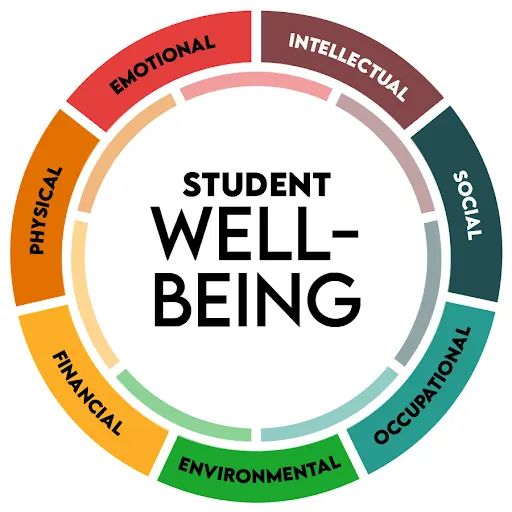
The question of what happiness science would teach is important, because it is where the scepticism often concentrates. Can it really be taught? Is there a body of knowledge and practice rigorous enough for academic credit?
The answer — as the Rekhi Foundation’s experience across 50+ universities in 6 countries demonstrates — is unambiguously yes.
A well-designed Science of Happiness Course is structured around several interconnected domains of knowledge and practice:
Students learn how the brain processes emotion — the role of the prefrontal cortex in regulation, the amygdala in threat detection, the Default Mode Network in rumination, neuroplasticity as the mechanism by which practice changes brain structure. They learn why the negativity bias exists and how to work with it. They learn what happens neurologically during stress, and what specific practices measurably counteract it.
This is not self-help content. This is neuroscience. It belongs in a university curriculum for the same reason that any other branch of applied neuroscience does.
Students engage with Martin Seligman’s PERMA model — Positive Emotions, Engagement, Relationships, Meaning, Achievement — not as a motivational framework but as an empirically derived account of the components of lasting wellbeing. They study the distinction between hedonic wellbeing (the presence of positive emotion) and eudaimonic wellbeing (the experience of meaning, engagement, and authentic self-expression). They examine the research on what actually predicts life satisfaction across cultures and over time — and confront how consistently that research diverges from what our culture tells us to pursue.
Mindfulness training in an academic context is not simply a relaxation technique. It is a practice with a precise mechanistic rationale — training the prefrontal attention network, developing metacognitive awareness, building the capacity to observe emotional experience without automatic reactivity. Students learn the science behind the practice, engage in structured practice themselves, and study the research literature on its effects on mental health, cognitive performance, and physical health.
The empirical research on gratitude practice, acts of kindness, and prosocial behaviour is among the most consistently replicated in happiness research. Students learn not just that these practices work but why — the neurological and psychological mechanisms through which regularly attending to the good, contributing to others, and investing in relationships produces lasting wellbeing improvements.
Perhaps the most immediately practical domain: the science of emotional regulation. Students learn what emotions actually are — not problems to be solved but signals to be read. They learn specific, evidence-based techniques for working with difficult emotions: cognitive reframing, acceptance-based approaches, the role of the body in emotional regulation, the difference between suppression (which amplifies emotion) and processing (which resolves it). They develop what psychologist Lisa Feldman Barrett calls emotional granularity — the ability to distinguish between different emotional states with precision, which is strongly associated with better regulation and greater wellbeing.
Given that the quality of relationships is the single most robust predictor of wellbeing in the entire happiness research literature, a course on happiness would be incomplete without rigorous attention to the science of human connection. Students learn what makes relationships sustaining versus draining, the neurobiology of trust and oxytocin, the research on loneliness and its effects on physical and mental health, and the specific behaviours that are associated with relationship quality across the lifespan.
Drawing from Viktor Frankl’s logotherapy, Seligman’s work on meaning, and the extensive research on purpose and longevity, students engage with the question of what makes a life feel meaningful — and with structured exercises for identifying their own values and the degree to which their current choices reflect them. This is not a therapeutic exercise. It is the kind of reflective, examined living that Socrates considered the only life worth having — and that contemporary research shows is strongly associated with resilience, physical health, and subjective wellbeing.
There is one objection to happiness as a core university subject that deserves a genuine answer rather than a dismissal.
It goes like this: wellbeing is personal. People have different values, different ideas of what constitutes a good life, different cultural and religious frameworks for thinking about flourishing. Who is the university to decide what happiness looks like, and to require students to pursue a particular version of it?
This is a real concern, and it points to a real risk. A happiness curriculum that is culturally imperialist — that imposes one tradition’s conception of flourishing on students from diverse backgrounds — would be educationally and ethically problematic.
But the objection misunderstands what the field actually teaches. Happiness science does not prescribe a particular vision of the good life. It teaches the psychological and neurological mechanisms that underlie wellbeing across diverse conceptions of it. It teaches emotional regulation not as a path to any particular emotion but as a capacity that supports whatever life the student chooses. It teaches the research on social connection not as a mandate for any particular type of relationship but as evidence about the human need for authentic belonging.
The Rekhi Foundation’s approach — which draws explicitly on both ancient Indian philosophical traditions and contemporary Western psychology — demonstrates that this synthesis is possible without either being reductive. The Science of Happiness Course taught at IIT Kharagpur is not the same as the one taught at partner institutions in Japan or the UAE. The core knowledge is shared. The cultural inflection is appropriate to the context.
Moreover — and this is the decisive point — universities already impose normative frameworks on students constantly. The decision to require students to study economics rather than philosophy, or computer science rather than ethics, is not a neutral decision. It reflects a particular set of values about what matters. The decision to exclude the science of wellbeing from the core curriculum is not a neutral decision either. It is a choice — and increasingly, a choice that is very hard to defend.
The Rekhi Foundation for Happiness was built on a conviction that is simultaneously ancient and urgently contemporary: that human flourishing is a learnable discipline, not a lucky circumstance, and that the systematic teaching of happiness science should be as central to higher education as the teaching of any other field of knowledge with significant consequences for human welfare.
Since 2016, the Foundation has established Centres of Excellence for the Science of Happiness in over 50 universities across 6 countries — including IIT Kharagpur, IIM Lucknow, Amity University, Delhi University, and institutions in the United States, Japan, the UAE, and Pakistan. The Science of Happiness Course is taught as a credit-bearing academic subject, not a workshop or wellness programme. It is assessed, researched, and continuously improved based on outcome data from students who complete it.
The MindLab technology — wearable biofeedback devices that measure physiological indicators of stress and wellbeing — brings scientific rigour to what might otherwise remain subjective. Students can observe, in real time, how specific practices affect their nervous systems. The data is not just motivating. It is educational — producing the kind of embodied, evidence-based understanding of wellbeing that changes not just what students know but how they live.
What the Foundation has learned across a decade of this work is consistent with what the research predicts: when students are given access to the knowledge and practices that happiness science offers, in an academic context that takes it seriously, the outcomes are measurable and meaningful. Students report lower anxiety, stronger sense of purpose, more authentic relationships, greater resilience under pressure, and a qualitatively different orientation toward their own lives.
This is what education is supposed to produce.

Return, for a moment, to the transcript we imagined at the beginning.
Thermodynamics — A Organisational Behaviour — B+ Financial Accounting — A− Science of Happiness — A
The discomfort that line produces is worth sitting with. Because it is not really discomfort at the idea of studying happiness. It is discomfort at what it implies: that a university has taken seriously its responsibility to prepare students not just for careers but for lives. That it has acknowledged — formally, structurally, in a credit-bearing course — that knowing how to live well is a form of knowledge, and that helping students acquire it is part of what education is for.
That discomfort is, in fact, a recognition. A recognition that we have been doing something important badly for a very long time — and that the cost of continuing to do so is not abstract.
It is the student who arrives brilliant and leaves broken.
It is the professional who achieves everything they were told to want and wonders why it feels like nothing.
It is the human capacity for genuine flourishing that universities have been systematically failing to cultivate — and that a different vision of higher education could, with the knowledge and tools we already possess, begin to restore.
The transcript with happiness on it is not a curiosity. It is a statement of intent.
It says: we take the whole person seriously here.
And that, ultimately, is what a university should be for.
Waldinger, R. & Schulz, M. (2023). The Good Life: Lessons from the World’s Longest Scientific Study of Happiness. Simon & Schuster. Harvard’s 85-year Study of Adult Development — finding that relationship quality is the single strongest predictor of life satisfaction and longevity — providing the research foundation for including social connection science in university wellbeing curricula. → https://www.goodlifeproject.harvard.edu
Counselling and mental health support are interventions — they address students who are already struggling. Emotional wellbeing education as a core subject is prevention — it equips all students with the knowledge and skills to maintain psychological health before crisis occurs. The distinction is analogous to the difference between treating disease and teaching nutrition: both are necessary, but only one addresses the underlying deficit. Research consistently shows that happiness research-based education — covering emotional regulation, mindfulness training, social connection science, and meaning-making — produces measurable improvements in student mental health outcomes. The scale of the current student mental health crisis makes the case for structural, preventive education overwhelming. A counselling service can reach hundreds of students per year. A core curriculum course reaches thousands — and changes not just how they manage distress but how they approach their entire lives.
Yes — and it is both extensive and specific. The most visible evidence is the Yale Psychology and the Good Life course, which became the most popular in the university's 317-year history when offered in 2018, and whose Coursera version has been completed by over four million people. Research on positive psychology interventions — including gratitude practice, mindfulness training, and values clarification — shows reliable, lasting improvements in wellbeing that persist months after intervention. The Rekhi Foundation's own data from over 50 university partnerships across 6 countries confirms that students who complete the Science of Happiness Course report significantly lower anxiety, stronger sense of purpose, and greater resilience under pressure. The neuroscience is equally supportive: studies show that the specific practices taught in happiness curricula produce measurable changes in brain structure and function — including increased prefrontal cortical thickness, reduced amygdala reactivity, and decreased Default Mode Network activity.
A rigorous Science of Happiness Course covers the neuroscience of emotion and wellbeing, the PERMA model of human flourishing, the psychology of emotional regulation, the science behind mindfulness training and gratitude practice, the research on social connection and relationships, and the philosophical and cultural dimensions of what constitutes a good life. Assessment can include reflective portfolios documenting the student's practice and self-observation, research paper components examining the evidence base for specific interventions, group projects applying happiness science to real-world contexts (school design, workplace policy, community programmes), and where MindLab technology is available, physiological data on stress and wellbeing indicators. The Rekhi Foundation's course is credit-bearing and formally assessed — it is an academic subject, not a workshop, and it demands the same intellectual rigour expected of any other discipline.
This is a legitimate concern, and it requires a genuine answer rather than dismissal. A poorly designed happiness curriculum could indeed be culturally reductive — imposing one tradition's conception of flourishing on students from diverse backgrounds. But a well-designed curriculum avoids this by focusing on the mechanisms of wellbeing rather than prescribing a particular vision of it. The research on emotional regulation, social connection, and meaning is cross-cultural in its validity. The Rekhi Foundation's approach — which deliberately integrates ancient Indian philosophical traditions including Vedantic, Buddhist, and Yogic frameworks alongside contemporary Western happiness research — demonstrates that happiness science is enriched rather than diminished by multicultural engagement. Students from any background can engage with the neuroscience of attention, the psychology of emotional regulation, and the research on social connection without having any particular lifestyle or value system prescribed to them. The goal is equipping students with knowledge and skills, not converting them to a happiness ideology.
The Rekhi Foundation has established Centres of Excellence for the Science of Happiness in over 50 universities across 6 countries, including leading Indian institutions such as IIT Kharagpur, IIM Lucknow, Amity University, and Delhi University. Students who complete the Science of Happiness Course consistently report measurable improvements across multiple wellbeing dimensions: lower self-reported anxiety, stronger sense of meaning and purpose, more authentic social relationships, greater resilience under academic and professional pressure, and a qualitatively different orientation toward their own emotional lives. The MindLab technology deployed in partner institutions provides physiological confirmation of these self-reported improvements — measuring cortisol-related stress indicators, heart rate variability, and other markers of nervous system regulation before and after engagement with the curriculum. The most consistent finding across all partner institutions is this: students describe the course as the most personally significant academic experience of their university careers. Not the most technically demanding or the most professionally useful — the most personally significant. That is the language of genuine education.

Rekhi Foundation, founded in 2016, promotes Happiness Science via university centers, collaborating globally across six countries.
Table of Contents
6/79, S/F, Gurudwara Road, Karol Bagh, New Delhi – 110005, INDIA
2051, Last Chance Court, Gold River, CA 95670, USA