There is a particular kind of guilt that arrives on a Sunday afternoon.
You are lying on the sofa. The light is coming through the window at that golden, unhurried angle that only exists on weekend afternoons. There is nowhere to be, nothing urgent pressing. And somewhere in the back of your mind — quietly, persistently — a voice begins its accounting.
You haven’t exercised today. You should be reading something useful. You could be getting ahead on next week. You’re wasting time.
This voice is so familiar that most people no longer notice it as something strange. They experience it simply as the background condition of being alive in the modern world. The ambient guilt of not being productive enough — not doing enough, not achieving enough, not optimising enough — has become so normalised that its absence feels suspicious.
But this voice is not wisdom. It is not discipline. It is not even particularly useful.
It is the internalised ideology of a culture that has made a fundamental error about what human beings are for — and what actually produces the kind of performance, creativity, resilience, and wellbeing that everyone, including the most achievement-oriented person you know, actually wants.
The error is this: rest is the opposite of productivity.
The science says otherwise. And the science is unambiguous enough, and accumulated enough, that continuing to ignore it is not just a personal loss. It is a form of organised self-sabotage — practised individually, reinforced culturally, and costing us far more than we realise.
To understand why rest feels guilty, you have to understand how we arrived here.
The Protestant work ethic — described by sociologist Max Weber in 1905 — established a cultural equation between labour, moral virtue, and divine favour that shaped the entire architecture of Western industrial and post-industrial society. Idleness was not merely unproductive; it was sinful. Busyness was not merely efficient; it was righteous.
This framework was useful for a particular kind of economy — one that needed human beings to function as consistent, reliable units of labour output. And it produced a cultural vocabulary that we still speak fluently: hustle, grind, rise and shine, sleep when you’re dead, you can rest when the work is done.
But the work is never done. That is the nature of modern knowledge work — it is infinite, boundary-less, portable, and available at all hours through the device in your pocket. And so the Protestant work ethic, applied to the twenty-first century, produces not righteous productivity but exhausted people grinding through diminishing returns, mistaking motion for progress and busyness for meaning.
The research on what this actually produces — in terms of cognitive performance, creative output, physical health, and emotional wellbeing — is not ambiguous. It produces less of all of it. Not more.

Before examining the science, it is worth being precise about what rest means — because the word is frequently misunderstood, and that misunderstanding is part of why it is so systematically undervalued.
Rest is not the same as sleep, though sleep is one of its most critical forms. Rest is not the same as entertainment, though certain kinds of entertainment can be genuinely restorative. Rest is not the same as laziness, which implies the avoidance of things that should be done. And rest is not the passive absence of activity — it is often an active state with specific neurological characteristics.
Dr. Saundra Dalton-Smith, in her research on restorative states, identifies seven distinct types of rest that human beings require for genuine recovery: physical, mental, sensory, creative, emotional, social, and spiritual. Most people who feel chronically exhausted are not physically tired. They are mentally, emotionally, or sensorially depleted — and no amount of sleep, if it is accompanied by phone-scrolling until midnight and anxiety-checking upon waking, fully restores those specific deficits.
True rest, in the sense that matters for human flourishing, is the deliberate creation of conditions in which the mind and body can recover, consolidate, and renew. It requires not just the cessation of activity but the cessation of demand — the experience of time that is genuinely unhurried, genuinely unscheduled, genuinely free from the pressure to produce or perform.
This kind of rest is becoming vanishingly rare. And its scarcity is costing us enormously.
Here is what actually happens in your brain when you stop.
For years, neuroscientists assumed that the brain in a state of rest was essentially inactive — a quieter version of the brain at work. Then, in 2001, Marcus Raichle at Washington University made a discovery that changed the field: the brain is never actually inactive. When people stop performing goal-directed tasks, a specific network of brain regions activates — reliably, consistently, across individuals and cultures. Raichle called it the Default Mode Network (DMN).
The Default Mode Network is not the brain doing nothing. It is the brain doing something else — something that is, in many respects, more cognitively demanding than focused task performance.
The DMN is active during:
When you are doing nothing — staring out of a window, lying in a field, taking a long shower with no particular thoughts — your Default Mode Network is performing cognitive work that your focused, task-oriented brain literally cannot do. It is integrating, connecting, consolidating, and generating the kind of understanding that does not arise from effort but from allowing.
This is not a metaphor. It is a description of a specific neural architecture with documented functional consequences.
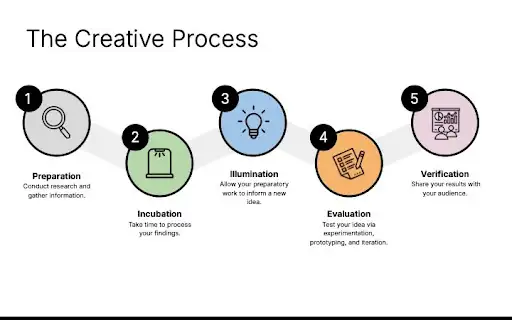
The history of creative breakthrough is, to a remarkable degree, a history of people doing nothing.
Archimedes in his bath. Newton under the apple tree. Einstein on his bicycle. Poincaré — one of the greatest mathematicians of the nineteenth century — famously described how his most important mathematical insight arrived not during concentrated work but at the precise moment he stepped onto a bus, having spent weeks working on a problem without resolution. The solution appeared, fully formed, in an instant of unguarded attention.
These are not coincidences or mythology. They describe a specific cognitive phenomenon that researchers call incubation — the process by which the unconscious mind continues working on a problem after conscious attention has moved away, and delivers solutions in moments of reduced cognitive load.
The neuroscience behind this is now well understood. Focused, effortful thinking is primarily mediated by the executive network — the prefrontal cortex and associated regions responsible for analytical reasoning, working memory, and deliberate problem-solving. This network is excellent at following logical chains and applying known frameworks. It is less good at generating genuinely novel solutions, because genuinely novel solutions require the making of connections between things that are not obviously connected — a process that requires the broader, more associative architecture of the Default Mode Network.
Research by Ap Dijksterhuis at Radboud University demonstrated that people produce significantly more creative solutions to complex, multi-variable problems after a period of unconscious processing — distracted from the problem — than after an equivalent period of concentrated analytical thinking. The unconscious mind, freed from the narrow focus of deliberate effort, operates across a wider associative field and can make connections that conscious attention, by its very nature of exclusion, misses.
Doing nothing, in other words, is not time stolen from creative work. For many of the most important kinds of creative work, it is the work.
The consequences of chronic rest deprivation are documented across multiple fields of research — and they converge on the same conclusion: the person who never rests does not achieve more. They achieve less, more slowly, at greater personal cost, and with diminishing returns that they typically attribute to insufficient effort rather than insufficient recovery.
Cognitive performance deteriorates. Research on sustained attention shows that performance on tasks requiring concentration declines significantly after approximately 90 minutes of uninterrupted focus, and continues to decline with each subsequent hour. This is not a matter of motivation. It is a neurological phenomenon: the neurotransmitter systems that support sustained attention — particularly the norepinephrine system — deplete faster than they are replenished during continuous demand. Brief rest periods allow partial replenishment and restore performance. Extended rest allows full recovery.
Peretz Lavie’s research on what he called ultradian rhythms — 90-minute cycles of alertness and drowsiness that operate throughout the waking day — shows that human cognitive performance naturally peaks and troughs in approximately 90-minute intervals. High-performance athletes have long known this: the elite performers who produce the most do not practise more than their peers. They practise in focused intervals separated by deliberate rest, and they accumulate more total practice hours by recovering between sessions. The same principle applies to knowledge work — and it is almost universally ignored.
Decision quality declines. The phenomenon of decision fatigue — documented extensively by Roy Baumeister, Shai Danziger, and others — shows that the quality of decisions deteriorates systematically as a function of the number of decisions already made without rest. Judges grant parole at significantly lower rates as their session progresses without a break. Doctors make riskier prescribing decisions later in the day. Executives make worse strategic choices in afternoon meetings than morning ones. Rest does not just restore energy. It restores the executive function on which good judgement depends.
Physical health suffers. Chronic overwork without adequate rest is associated with elevated cortisol, increased inflammatory markers, impaired immune function, higher rates of cardiovascular disease, and accelerated cellular ageing. The Japanese concept of karoshi — death from overwork — is not a metaphor. It is a documented medical phenomenon, officially recognised by the Japanese government, that kills thousands of people per year. The body, like the mind, requires recovery as a condition of continued function.
Emotional regulation degrades. Research on emotional wellbeing consistently shows that rest-depleted individuals show heightened amygdala reactivity — they are more easily triggered by negative stimuli, less able to access the regulatory capacity of the prefrontal cortex, and more likely to interpret neutral situations as threatening. The chronically busy, chronically tired person is not just less productive. They are measurably less emotionally resilient, less empathic, and less capable of the quality of attention that meaningful relationships require.
What is striking about the science of rest is how thoroughly it converges with the wisdom that virtually every pre-industrial human culture built into its social architecture.
The Jewish Sabbath — Shabbat — is one of the most ancient institutionalised rest practices in recorded history. One day in seven, completely protected from labour. Not as a reward for productive weeks but as a structural feature of the calendar — a recognition that human beings require rhythmic rest as a condition of wholeness, not as a treat contingent on sufficient achievement.
The Indian concept of Svadhyaya — one of Patanjali’s Niyamas in the Yoga Sutras — describes a practice of reflective withdrawal that is not idleness but a specific form of inward attention. The classical Indian understanding of time included not just active Pravritti (engagement with the world) but Nivritti (withdrawal and return to one’s own nature) as equally necessary poles of a complete human life.
The Roman tradition of otium — distinguished from negotium (business, literally not-otium) — was understood not as the absence of productivity but as the condition for the highest kinds of intellectual and creative activity. The Roman philosopher Seneca, writing in the first century CE, described otium as the space in which genuine wisdom, as opposed to mere busyness, becomes possible.
Across cultures, across millennia, human societies built rest into their structures because they understood — through direct observation of human experience rather than controlled experiments — that a human life without it is diminished in ways that ultimately undermine everything that rest is supposed to make room for.
The insight is not new. What is new is that we stopped listening to it. And what is also new is that we now have the neuroscience to explain, in precise mechanistic terms, exactly why those ancient traditions were right.
Understanding why rest matters is necessary but insufficient. The person who intellectually appreciates the value of doing nothing but cannot actually bring themselves to do it — because the guilt is too loud, because the phone is too available, because the mind won’t stop running — needs something more concrete.
Here is what the research on restorative practices actually supports:
Studies across environmental psychology — including Rachel and Stephen Kaplan’s Attention Restoration Theory — show that exposure to natural environments measurably restores the capacity for focused attention by engaging what the Kaplans call fascination: the low-effort, involuntary form of attention that natural settings characteristically produce. Unlike the directed attention of task performance, fascination replenishes rather than depletes attentional resources.
Even brief nature exposure — 20 minutes in a park, a walk in a tree-lined street — produces measurable reductions in cortisol, improvements in sustained attention, and restoration of positive affect. The specific feature required is soft fascination: environments that engage attention effortlessly without demanding focused cognitive effort.
The guilt around daydreaming is almost perfectly inversely proportional to its cognitive value. Research on mind-wandering — particularly from Jonathan Schooler’s laboratory at the University of California, Santa Barbara — shows that deliberate, undirected mind-wandering is associated with increased creative problem-solving, improved planning capacity, and enhanced self-awareness.
The key word is deliberate. Anxious rumination — replaying problems, catastrophising, looping through unresolved concerns — also involves the Default Mode Network but does not produce the same restorative effects. Genuine daydreaming involves a quality of relaxed, open, non-goal-directed attention that is increasingly difficult to access in a world of constant notification and stimulation — and increasingly valuable precisely because of its rarity.
Matthew Walker’s research at UC Berkeley’s Centre for Human Sleep Science is the most comprehensive recent documentation of what sleep actually does — and why its deprivation is so catastrophically costly.
During sleep, the brain does not merely rest. It actively consolidates memories, clears metabolic waste products through the glymphatic system (including the amyloid plaques associated with Alzheimer’s disease), regulates emotional memory (reducing the charge of difficult experiences), and performs the neurological maintenance that waking function depends upon.
Seven to nine hours of sleep per night is not a lifestyle preference. It is a biological requirement. And the person who prides themselves on sleeping five hours and getting more done is, almost certainly, producing worse work, making worse decisions, and ageing faster than they would be if they slept eight — while being too cognitively impaired by their sleep deprivation to accurately assess the quality of their own performance.
At the micro-level — within the working day — the most evidence-supported intervention for sustaining performance is the deliberate break between focused work periods.
Research by Alejandro Lleras at the University of Illinois shows that brief mental diversions from a task dramatically improve the ability to sustain attention and performance over prolonged periods. The brain habituates to a consistent stimulus — the sustained performance demand of focused work — and its attentional resources become progressively less available. Brief disengagement resets this habituation and restores attentional capacity.
The implication: a ten-minute break every 90 minutes is not lost productivity. It is the structural condition for the productivity that follows.
It is worth noting that mindfulness training — often categorised as a productivity practice — is, neurologically, a specific form of deliberate rest. It does not produce the same Default Mode Network activity as undirected mind-wandering, but it produces measurable restorative effects through a different mechanism: the deactivation of the evaluative, self-critical, task-monitoring processes that accompany most waking activity, and the cultivation of a non-reactive, present-moment awareness that allows the nervous system to settle.
Research by Richard Davidson and colleagues at the University of Wisconsin shows that even brief mindfulness training — ten to twenty minutes — measurably reduces cortisol, decreases amygdala reactivity, and restores the prefrontal regulatory capacity that sustained effort depletes. It is rest with precision — not passive but specific in its restorative effects.
The final and most important point is this: the ability to rest — genuinely, unguiltily, restoratively — is itself a skill. And like any skill, it requires practice.
This sounds paradoxical. Rest should be the easiest thing in the world. But for anyone who has spent years internalising the cultural equation between busyness and worth, it is not. The capacity to be unproductive without anxiety — to sit in a garden without reviewing tomorrow’s tasks, to take a walk without listening to a podcast, to spend a Sunday afternoon in genuine idleness without the accumulated weight of everything that could be being done — requires, for many people, a deliberate and sustained re-education of the self.
That re-education begins with a conceptual shift: understanding that rest is not time stolen from productivity but time that makes everything else possible. This is not a relaxation of standards. It is a more accurate model of how human performance actually works.
It continues with a practical shift: building rest into the structure of the day and week with the same intentionality that busy people apply to their most important commitments. Not hoping for rest to happen, but scheduling it. Protecting it. Treating the 90-minute walk on Saturday morning as non-negotiable as the 9 AM board meeting.
And it deepens with an identity shift — one that the Rekhi Foundation’s happiness program has been cultivating in universities and organisations for years: the recognition that a human being is not a unit of output. That human flourishing is not the same as professional achievement. That what you produce is not a measure of what you are worth. And that the quality of your attention — to your work, to the people you love, to the texture of your own experience — depends entirely on the quality of your rest.
The art of doing nothing is not the abandonment of ambition. It is the recognition that the foundation of all genuine ambition is a mind that has been allowed to recover, to wander, to integrate, and to return to its work renewed.
The Sunday afternoon on the sofa, with the golden light coming through the window — that is not wasted time.
That is the engine running.
Dalton-Smith, S. (2019). Sacred Rest: Recover Your Life, Renew Your Energy, Restore Your Sanity. FaithWords. Research-based framework identifying seven distinct types of rest — physical, mental, sensory, creative, emotional, social, and spiritual — and the specific deficits that result from their absence. Provides the conceptual foundation for understanding rest as a multidimensional requirement rather than a single behaviour. → https://ichoosemybestlife.com/sacred-rest/
The guilt you feel when resting is not a personality flaw — it is the predictable result of cultural conditioning that has systematically equated busyness with virtue and idleness with failure. Sociologist Max Weber traced this equation to the Protestant work ethic, which established a cultural framework in which labour became morally meaningful and rest became morally suspect. This framework was reinforced throughout industrialisation and has been dramatically amplified by digital technology, which makes work permanently available and creates the expectation that availability itself is a form of productivity. The result is what psychologists call internalized productivity ideology — a deep, often unconscious belief that your worth is a function of your output. Understanding this as a cultural construction rather than a natural law is the first step toward what the Rekhi Foundation's happiness program calls an identity shift: the recognition that you are a human being, not a unit of output, and that your capacity to flourish — and to produce the best of which you are capable — depends on protecting the conditions for genuine rest.
The most important discovery in the neuroscience of rest is the Default Mode Network (DMN) — a specific network of brain regions that activates during unstructured, undirected mental states and performs cognitive functions that the focused, task-oriented brain cannot. These functions include memory consolidation, creative insight through wide associative processing, perspective-taking and social cognition, future planning, and self-integration. Research by Marcus Raichle at Washington University — who first characterised the DMN — established that the brain is never truly inactive during rest: it shifts from focused, executive processing to this broader, more integrative mode. Research on mindfulness training shows that regular practice measurably changes the relationship between the DMN and the prefrontal cortex — reducing the maladaptive rumination that the DMN produces when dysregulated while preserving its restorative and creative functions. The practical implication is that time spent in genuine rest — including apparently unproductive activities like staring out of windows, walking without a destination, or lying in a garden — is time during which important neurological work is being performed.
Research on elite performance — originally conducted by Anders Ericsson, whose deliberate practice research is the basis of the popular 10,000-hour rule — found that the most accomplished performers in any field practise for approximately four hours per day, divided into two concentrated sessions with deliberate rest between them. They sleep more than average — typically eight to nine hours — and use afternoon naps systematically. They do not work more than their less accomplished peers. They work more efficiently, in better-recovered neurological states, and they protect rest with the same intentionality they apply to practice. The types of rest most critical for human flourishing vary by the nature of the demand: knowledge workers need mental and sensory rest (time away from screens and information processing) as much as physical rest. Emotionally demanding work — caring professions, leadership roles, parenting — requires specific emotional rest (time spent in low-demand social environments or genuine solitude). The single most universally important form of rest is sleep: seven to nine hours, consistently timed, protected from pre-sleep screen exposure. No other form of rest fully compensates for its absence.
The discomfort of rest is real and requires active management for most people who have spent years in high-demand environments. Several research-supported approaches help. First, reframe rest cognitively: remind yourself, specifically and repeatedly, that rest is producing real neurological value — consolidating memory, generating creative insight, restoring executive function. This is not rationalization. It is accurate. Second, begin with structured rest rather than attempting unstructured idleness: a deliberate twenty-minute nature walk, a ten-minute body scan, a specified period of reading for pleasure. Structure reduces the anxiety of open-ended time while providing genuine restoration. Third, remove the devices — specifically the smartphone — from the rest environment. Research shows that the mere presence of a smartphone, even face-down and silenced, reduces available cognitive resources. Genuine rest requires genuine disconnection. Over time, as the restorative effects of rest become experientially real rather than merely theoretical, the guilt tends to diminish — because you begin to feel the difference between a week built on adequate rest and one without it, and the data of your own experience becomes more compelling than the cultural narrative that rest is something to be earned.
Rest is not peripheral to emotional wellbeing — it is foundational to it. The research on rest-deprived states consistently shows heightened negative affect, reduced positive emotion, impaired emotional regulation, and increased reactivity to stressors. Matthew Walker's sleep research demonstrates that sleep deprivation amplifies amygdala reactivity by up to 60%, making rest-deprived individuals measurably more emotionally volatile and less able to access the prefrontal regulation that mindfulness training and other wellbeing practices depend upon. The happiness research literature — including the PERMA model, self-determination theory, and the Harvard Study of Adult Development — consistently shows that the conditions for human flourishing include engagement, meaning, and authentic social connection. All three of these are degraded by chronic rest deprivation: engagement requires attentional resources that rest restores, meaning-making is a Default Mode Network function that only occurs during genuine unstructured time, and social connection requires the empathic presence that exhaustion systematically prevents. Rest is not a supplement to a wellbeing practice. It is its precondition.

Rekhi Foundation, founded in 2016, promotes Happiness Science via university centers, collaborating globally across six countries.
Table of Contents
6/79, S/F, Gurudwara Road, Karol Bagh, New Delhi – 110005, INDIA
2051, Last Chance Court, Gold River, CA 95670, USA