In recent years, search interest in terms like “neuroscience of mindfulness,” “how meditation changes the brain,” “benefits of mindfulness meditation,” and “brain scans before and after meditation” has grown steadily across India, the USA, the UK, and Europe. As mental health awareness increases and stress-related disorders rise globally, more individuals are turning toward evidence-based practices that improve emotional regulation and cognitive performance.
One of the most compelling areas of research connecting science and well-being is the neuroscience of mindfulness.
Mindfulness — often defined as present-moment awareness without judgment — is no longer viewed as merely a spiritual or philosophical practice. Modern neuroscience now confirms that consistent mindfulness practice physically alters brain structure and function. From stress reduction to improved focus and emotional resilience, mindfulness reshapes neural pathways in measurable ways.
This article provides a detailed, research-backed exploration of how mindfulness transforms the brain, why it matters today, and how present-moment awareness supports long-term mental well-being.
This is commonly described as the practice of intentionally paying attention to the present moment with openness and non-reactivity. In psychological research, it is associated with enhanced emotional regulation, attention control, and stress reduction.
From a neuroscience perspective, mind-fulness affects brain regions responsible for:
Programs such as Mindfulness-Based Stress Reduction, developed by Jon Kabat-Zinn, have been instrumental in bringing this into mainstream clinical research and healthcare settings.
Scientific imaging tools such as fMRI (functional magnetic resonance imaging) have allowed researchers to observe how meditation and present-moment awareness influence neural activity in real time.
Search queries like “does meditation change brain structure,” “mindfulness and neuroplasticity,” and “scientific benefits of meditation” reflect a growing demand for evidence-based mental health strategies.
There are three key reasons this topic is gaining traction:
First, chronic stress and burnout have become widespread concerns. People are actively searching for non-pharmaceutical approaches to stress management.
Second, neuroscience has provided visual proof — through brain imaging — that this creates measurable biological changes.
Third, educational institutions and corporations are integrating awareness training to enhance focus, productivity, and emotional intelligence.
The intersection of brain science and well-being makes mindfulness both credible and compelling.
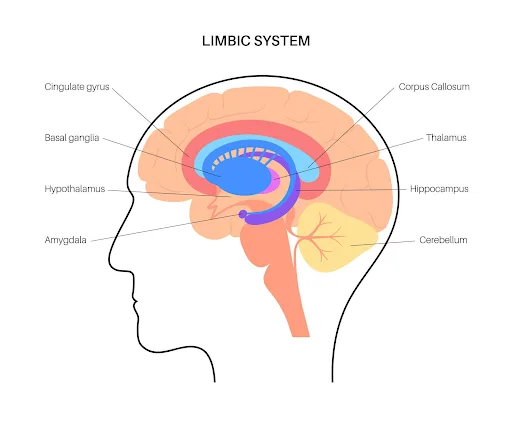
The amygdala is the brain’s threat detection center. It activates during stress, fear, and anxiety. Chronic stress can lead to heightened amygdala activity, contributing to anxiety disorders and emotional reactivity.
Research shows that consistent mind-fulness meditation reduces amygdala activation and may even decrease its volume over time. This suggests that mind-fulness strengthens the brain’s ability to regulate stress rather than react impulsively.
When individuals practice present-moment awareness, they create a pause between stimulus and response. Over time, this weakens habitual stress reactions and strengthens emotional resilience.
The prefrontal cortex is responsible for executive functions such as planning, decision-making, attention regulation, and impulse control.
Neuroscientific studies indicate that mind-fulness increases activation and thickness in the prefrontal cortex. This enhances:
Search trends like “how to improve focus naturally” and “meditation for concentration” align directly with this neural benefit.
As mindfulness strengthens the prefrontal cortex, individuals become better equipped to manage distractions and make thoughtful decisions.
One of the most fascinating findings in mindfulness research is its impact on neuroplasticity — the brain’s ability to reorganize and form new neural connections.
Studies suggest that regular mind-fulness practice increases gray matter density in areas associated with memory, learning, empathy, and emotional regulation.
This means the brain is not fixed. Through consistent practice, individuals can literally rewire neural pathways toward greater well-being.
The Default Mode Network (DMN) is active when the mind wanders or engages in self-referential thinking. Overactivity in this network is linked to rumination and anxiety.
Mindfulness meditation reduces activity in the DMN, helping individuals break cycles of overthinking and negative self-talk.
Search queries such as “how to stop overthinking” and “how to calm the mind” reflect widespread interest in this benefit.
By anchoring attention in the present moment, mind-fulness decreases mental noise and enhances clarity.
The neurological changes associated with mindfulness translate into practical benefits, including:
Unlike temporary relaxation techniques, mind-fulness fosters sustainable changes in neural functioning.
Applying mindfulness does not require hours of meditation. Even brief daily practice can begin reshaping neural pathways.
You might start by:
Consistency is more important than duration. Small daily practices strengthen neural circuits associated with calm and clarity.
In an era marked by digital overload, constant notifications, and rising anxiety levels, the ability to remain present has become both rare and powerful.
The neuroscience of mind-fulness provides scientific validation for what contemplative traditions have long understood: awareness transforms experience.
By strengthening the prefrontal cortex, calming the amygdala, and enhancing neuroplasticity, mindfulness offers a biologically grounded path toward emotional resilience and cognitive clarity.
Mind-fulness changes the brain by reducing amygdala activity (stress response), strengthening the prefrontal cortex (focus and regulation), increasing gray matter density, and regulating the default mode network associated with overthinking.
Yes. Neuroimaging studies show measurable structural and functional changes in the brain after consistent mind-fulness meditation practice.
Some studies suggest changes can begin within eight weeks of consistent practice, though benefits accumulate with long-term engagement.
Research indicates that mindfulness reduces stress reactivity and emotional rumination, both of which contribute to anxiety.
Mind-fulness is a quality of awareness. Meditation is one structured practice used to cultivate mindfulness.
Rising stress levels, burnout, and interest in non-pharmaceutical mental health strategies have increased demand for evidence-based practices like mind-fulness.

Rekhi Foundation, founded in 2016, promotes Happiness Science via university centers, collaborating globally across six countries.
Table of Contents
6/79, S/F, Gurudwara Road, Karol Bagh, New Delhi – 110005, INDIA
2051, Last Chance Court, Gold River, CA 95670, USA