There is a phrase in the Nguni Bantu languages of southern Africa that has no precise equivalent in English, though dozens of translations have been attempted.
Umuntu ngumuntu ngabantu.
Person is a person through other persons.
Or: I am because we are.
Or, in the version that Archbishop Desmond Tutu — who spent decades explaining Ubuntu to the world — most often used: A person is a person through other persons.
Ubuntu is the name given to this philosophy — a word that comes from the same Nguni root, describing the quality of human being that is expressed through generosity, compassion, belonging, and genuine care for the humanity of others. It is not simply a cultural value or a political slogan. It is a comprehensive philosophy of what a human being is, what makes a life meaningful, and what produces genuine human flourishing — both individually and collectively.
And it turns out that contemporary happiness research, approached from a completely different direction using entirely different methods, is arriving at conclusions that sound remarkably like Ubuntu.
That convergence is not coincidental. It is evidence — from opposite ends of the methodological spectrum — that some truths about human wellbeing are not cultural opinions. They are facts about the kind of creature we are.
Ubuntu is frequently cited and frequently misunderstood. In the popular Western imagination, it is often reduced to a kind of communal niceness — a vague encouragement to be kind and cooperative. This misses its philosophical depth considerably.
Ubuntu is a ontological claim — a claim about the nature of being itself. It asserts that human identity is not primarily individual. That the self is not a pre-formed, autonomous unit that subsequently enters into relationships with others. That personhood — the full expression of what it means to be human — is constituted through relationship, through community, through the network of mutual recognition and care in which a person is embedded.
The philosopher Augustine Shutte, one of the most rigorous academic interpreters of Ubuntu, describes it this way: “Our deepest moral obligation is to become more fully human. And this means entering more and more deeply into community with others.”
This is not a call to self-sacrifice. It is a description of what selfhood actually is. In the Ubuntu framework, the isolated individual — the self-sufficient, self-contained autonomous person of Western liberal philosophy — is not the fullest expression of humanity. It is a diminished version of it. Full humanity is relational humanity.
Ubuntu expresses itself in specific social and cultural practices: the obligation to welcome strangers, to share resources, to celebrate others’ achievements as collective achievements, to grieve others’ losses as collective losses, to seek consensus rather than victory in conflict, to ensure that no member of the community is left behind. These are not sentimental aspirations. They are the practical expressions of a philosophical understanding of what human beings are and what they need to flourish.
To understand Ubuntu is to understand something about the conditions in which it developed.
The philosophy emerged across the diverse cultures of sub-Saharan Africa over thousands of years of communal life in conditions that required genuine interdependence for survival. In the savannah, the desert, and the forest, individual survival was inseparable from collective survival. The person who hoarded was the person who endangered the group. The person who shared was the person who made survival possible. Ubuntu is not naive idealism — it is wisdom distilled from the experience of what actually sustains human life across generations.
This origin does not make Ubuntu merely pragmatic, however. It evolved from practical necessity into a profound philosophical understanding — the recognition that the interdependence that sustains physical survival also sustains psychological, emotional, and spiritual life. That the person who is truly alone — not just physically but relationally, who has no community of mutual recognition and care — is not fully alive in the ways that matter most.
Nelson Mandela, who embodied Ubuntu in his extraordinary capacity for reconciliation after 27 years of imprisonment, described it this way: “Ubuntu does not mean that people should not enrich themselves. The question therefore is: are you going to do so in order to enable the community around you to improve?”
This is the full complexity of Ubuntu: not the suppression of individual development but its orientation toward the collective. Not the denial of achievement but the recognition that achievement finds its fullest meaning in what it contributes to others.

Contemporary happiness research has, over the past three decades, accumulated a body of evidence that maps with striking precision onto the Ubuntu philosophical framework.
The most cited finding is the one from Harvard’s 85-year Study of Adult Development — the longest longitudinal study of wellbeing ever conducted. Robert Waldinger, the study’s current director, summarised its central finding in one of the most-watched TED Talks in history: “The clearest message that we get from this 75-year study is this: good relationships keep us happier and healthier. Period.”
Not income. Not achievement. Not fame or professional success or intellectual accomplishment. Relationships.
The quality of social bonds — the presence of people who genuinely know you, who you can trust, who you can turn to — is the single strongest predictor of physical health, mental health, life satisfaction, and longevity in the entire happiness research literature.
This is not a minor correlation. In John Cacioppo’s landmark research on loneliness at the University of Chicago, social isolation was found to be as damaging to health as smoking 15 cigarettes a day. The absence of Ubuntu — the absence of genuine human community — is, literally, a health crisis. It shortens lives and degrades the quality of the years it allows.
The Ubuntu philosophy stated this clearly, millennia before the longitudinal data existed to confirm it: a person is a person through other persons. Strip away the persons, and what remains is not a full human life.
The resonance between Ubuntu and contemporary psychological science extends well beyond happiness research.
Self-determination theory — developed by Edward Deci and Richard Ryan at the University of Rochester and now one of the most comprehensive accounts of human motivation and wellbeing in psychology — identifies three foundational psychological needs that must be satisfied for genuine wellbeing: autonomy (the experience of freely chosen action), competence (the experience of effectiveness and mastery), and relatedness (the experience of genuine connection and belonging with others).
Relatedness — in self-determination theory’s terms — is not merely pleasant. It is not an optional enhancement to wellbeing. It is a foundational need, as essential to psychological health as competence or autonomy. Environments that deny relatedness — that isolate people, that create competition rather than community, that undermine belonging — reliably produce diminished wellbeing regardless of how much autonomy or competence they provide.
Ubuntu is, in effect, a philosophy built around the recognition that relatedness is not merely one need among others but the constitutive condition of personhood itself. Self-determination theory arrived at the same conclusion through empirical research. The philosophical tradition had been there for millennia.
The neuroscientific evidence for the Ubuntu worldview is equally compelling.
The human brain is, at its deepest level, a social organ. It evolved in the context of small, interdependent social groups — and it is specifically calibrated, at the level of neurological architecture, to function optimally in conditions of social connection and to malfunction in conditions of social isolation.
The oxytocin system — the neurobiological basis of trust, bonding, and the sense of safety in the presence of others — is one of the most powerful modulators of mood, stress, and cognitive function available to the human nervous system. Oxytocin suppresses cortisol, reduces amygdala reactivity, enhances empathy, and creates the neurological conditions for the kind of open, generative, creative thinking that flourishing requires. It is released during physical touch, eye contact, genuine conversation, and the experience of being truly seen by another person.
What activates the oxytocin system is, essentially, Ubuntu: the experience of genuine mutual care, of being in real community with others, of the kind of authentic connection that is characterised by trust, generosity, and shared concern.
What depletes it — what leaves the oxytocin system under-activated and the cortisol system chronically elevated — is isolation, chronic competition, social performance anxiety, and the constant vigilance of a world in which other people are experienced as threats or judges rather than allies.
The neuroscience is describing, in the language of hormones and neural circuits, what Ubuntu described in the language of philosophy and lived communal experience: the human nervous system is designed for connection, and flourishes — in the most literal, biological sense — when embedded in genuine community.
The relevance of Ubuntu to the contemporary world is not merely academic. It is urgent.
The dominant social philosophy of the modern West — the philosophy that has, through globalisation and cultural export, become increasingly influential across the world including India — is a form of individualism that Ubuntu would recognise as a philosophical error.
This individualism holds that the fundamental unit of social reality is the autonomous individual — that the self is prior to its relationships, that society is a contract among pre-formed selves for mutual advantage, that achievement is a personal accomplishment and its benefits primarily personal entitlements. It celebrates independence, self-reliance, and individual success. It is suspicious of dependence, communal obligation, and the subordination of personal gain to collective welfare.
The consequences of this philosophy at scale are, by now, empirically documented.
Loneliness has reached epidemic proportions. Surveys consistently show that increasing numbers of people — particularly in wealthy, individualistic societies — report having no one to turn to in a crisis, no one who genuinely knows them, no community of belonging. The former US Surgeon General Vivek Murthy declared loneliness a public health epidemic in 2023, noting that its health consequences are comparable to those of obesity and smoking.
Depression and anxiety — both strongly associated with social disconnection — are at the highest recorded levels in history. The pursuit of individual achievement and material accumulation has produced, in many people, the precise hollowness that happiness research consistently finds when extrinsic goals are pursued at the expense of relational and intrinsic ones.
The competitive, performance-oriented, hyper-individualistic culture that many educational and professional environments cultivate is producing the neurological consequences that Ubuntu and contemporary happiness research would both predict: people who are accomplished in measurable ways and impoverished in the ways that matter most.
Ubuntu offers a different premise: not the abandonment of individual development, but its re-embedding in the relational context that makes it meaningful. Not the denial of achievement, but the recognition that achievement divorced from community is a diminished version of the full human possibility.
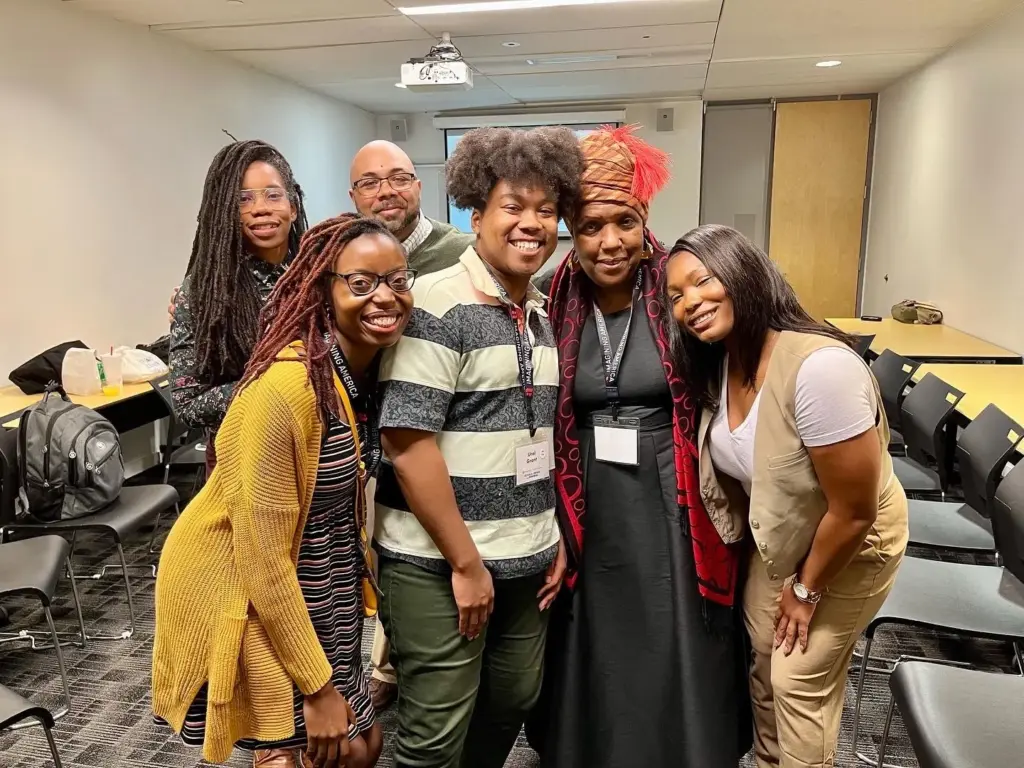
Ubuntu is not merely philosophical. It expresses itself in specific practices and orientations that have direct implications for how we structure communities, organisations, educational institutions, and lives.
One of the most concrete expressions of Ubuntu in daily life is the quality of attention given to others. In Ubuntu communities, the acknowledgement of another person’s presence — genuine, full, unhurried — is itself an ethical act. The Zulu greeting Sawubona — “I see you” — and the response Ngikhona — “I am here” — is not small talk. It is a mutual affirmation of humanity, a recognition that to be seen is not incidental to wellbeing but constitutive of it.
The research on what people need from their relationships is consistent with this: what produces the deepest relational satisfaction is not advice, solutions, or entertainment but the experience of being genuinely heard — of having another person’s full, non-judgmental attention.
In an age of half-attention — of conversations conducted while checking phones, of listening that is actually rehearsing the next response — the Ubuntu of genuine, full presence is both rare and more valuable than perhaps any other relational gift.
In the Ubuntu framework, achievement is not merely personal. It is relational — both in its origins (no one achieves without the support, teaching, and care of others) and in its obligations (achievement creates responsibility to contribute to the community that made it possible).
The African proverb — if you want to go fast, go alone; if you want to go far, go together — captures this precisely. Fast, individual progress and sustained, collective flourishing are not the same project. And in the long run, the latter is both more robust and more meaningful.
Happiness research supports this: people who frame their achievements in terms of collective contribution — who experience their work as a contribution to something beyond themselves — report significantly higher life satisfaction and greater resilience than those who frame achievement in purely personal terms. This is the research basis for what Viktor Frankl identified as the meaning-giving power of contribution to others — and what Ubuntu names as the relational structure of personhood itself.
One of the most powerful practical expressions of Ubuntu is the concept of restorative justice — the approach to wrongdoing that seeks healing and reconciliation rather than punishment and exclusion.
The Truth and Reconciliation Commission in post-apartheid South Africa — chaired by Archbishop Desmond Tutu and grounded explicitly in Ubuntu philosophy — is one of the most remarkable examples of restorative practice at a societal scale in modern history. Rather than prosecuting perpetrators of apartheid-era atrocities, the Commission sought acknowledgement, truth-telling, and the possibility of restored community.
Tutu’s articulation of the Ubuntu principle that animated this process is worth quoting: “Ubuntu says I am human only because you are human. If I undermine your humanity, I dehumanise myself.”
This is both a moral claim and a psychological truth confirmed by contemporary research: empathy, compassion, and the genuine recognition of others’ humanity are not only good for the people on the receiving end. They are neurologically and psychologically good for the practitioner. Compassion activates the brain’s reward circuits. Forgiveness reduces cortisol and inflammatory markers. Restorative engagement with those who have caused harm — when it is safe and chosen freely — produces better outcomes for the harmed, the harmer, and the community than punitive exclusion consistently does.
Ubuntu understood this long before the neuroscience made it measurable.
The Rekhi Foundation for Happiness draws its work from the convergence of wisdom traditions and contemporary science — from ancient Indian philosophy, from the insights of contemplative practice, and from the rigorous findings of happiness research and positive psychology.
Ubuntu belongs fully in this conversation.
It represents an African philosophical tradition that arrived, through millennia of communal experience and philosophical reflection, at conclusions that contemporary research is confirming from entirely independent directions. That human beings are constitutively relational. That human flourishing is not achievable in isolation. That the quality of our connections is not peripheral to wellbeing but its most fundamental condition. That contribution to others is not a cost to selfhood but one of its deepest expressions.
These are not African truths or Western truths or Indian truths. They are human truths — the kind that appear, in different vocabularies and through different methods, wherever human beings reflect seriously on what it means to live well.
The Upanishadic insight that the self is not separate from the larger whole. The Buddhist teaching on interdependence and the illusion of the isolated self. The Stoic claim that we are all citizens of the same world. Ubuntu’s I am because we are. The Harvard Study’s finding that the quality of relationships is the strongest predictor of everything we care about.
Different languages. Different methods. The same discovery.
Human flourishing is not a solo project. It is not achieved by the person who optimises their individual circumstances. It arises — when it arises — in the spaces between people: in genuine connection, in mutual recognition, in communities of shared care and shared purpose.
Ubuntu does not only teach us what happiness is. It teaches us what we are.
And once we understand what we are — genuinely, deeply relational beings, constituted through our connections, most fully alive in the presence of genuine community — the implications for how we build our educational institutions, our workplaces, our cities, our families, and our inner lives become clear.
The most important work of happiness research is not telling individuals how to feel better. It is describing the conditions under which human beings genuinely flourish together.
Ubuntu knew. The science confirms.
The question is what we do with what we now know.
Shutte, A. (1993). Philosophy for Africa. UCT Press. The most rigorous academic philosophical treatment of Ubuntu — establishing its ontological claims about the relational nature of personhood and situating it within the broader tradition of African philosophy. Essential for understanding Ubuntu as a serious philosophical position rather than a cultural slogan. → https://www.press.uct.ac.za
Ubuntu is a southern African philosophy whose central claim is expressed in the Nguni Bantu phrase Umuntu ngumuntu ngabantu — a person is a person through other persons. It holds that human identity and human flourishing are constitutively relational: that the self is not a pre-formed, autonomous individual who subsequently enters relationships, but a being whose personhood is constituted through genuine community, mutual recognition, and care. For wellbeing, the implication is direct and profound: full human flourishing is not achievable in isolation, no matter how much individual achievement, material comfort, or personal development is accumulated. The Harvard Study of Adult Development's 85-year finding that relationship quality is the single strongest predictor of wellbeing, health, and longevity is the contemporary empirical confirmation of what Ubuntu stated philosophically millennia ago. Ubuntu teaches that the most fundamental condition for emotional wellbeing is the quality of our connections with others — and that building and sustaining those connections is not peripheral to the good life but its deepest expression.
The convergence between Ubuntu and modern happiness research is one of the most striking examples of independent traditions arriving at the same truth. Research on social connection — including the Harvard Study, John Cacioppo's loneliness research, and the extensive literature on social support and health — confirms Ubuntu's central claim that human beings are constitutively relational and that isolation is genuinely damaging. Self-determination theory independently identifies relatedness as one of three foundational psychological needs essential to wellbeing. Neuroscience maps the oxytocin system — the biological architecture of trust and bonding — as a foundational modulator of mood, stress, and cognitive function. Martin Seligman's PERMA model of human flourishing explicitly includes Relationships as one of five core components of lasting wellbeing. Ubuntu provides these findings with a philosophical framework and a cultural tradition that is not merely consistent with contemporary science but anticipated it — establishing the relational nature of personhood as a foundational philosophical truth long before empirical methods existed to confirm it.
The loneliness epidemic — declared a public health crisis by the US Surgeon General in 2023, with health consequences comparable to smoking — is, from the Ubuntu perspective, the predictable consequence of a social philosophy that treats the isolated individual as the fundamental unit of reality. Ubuntu's response is not a programme or an intervention. It is a reorientation of values: the recognition that building and sustaining genuine community is not optional for human flourishing but its foundational condition. Practically, Ubuntu suggests prioritising the quality of relational presence over the quantity of social contact — because genuine recognition, full attention, and authentic care activate the neurological systems of connection more powerfully than superficial social interaction. It suggests designing communities, educational institutions, and workplaces around the conditions for genuine belonging rather than competitive isolation. And it suggests that emotional wellbeing education — teaching people about the relational foundations of wellbeing and the specific practices that sustain connection — is not a soft supplement to serious education but one of its most consequential components.
Absolutely — and this is one of the most important clarifications about Ubuntu's philosophical content. Ubuntu does not advocate the suppression of individual development, the denial of personal achievement, or the subordination of the self to the collective in a way that erases individuality. Nelson Mandela — who embodied Ubuntu throughout his life — was also one of the most formidably individuated human beings of the twentieth century. Ubuntu's claim is not that individuality is unimportant but that individuality finds its fullest expression in community rather than in isolation. The Ubuntu framework holds that genuine self-development — the realisation of one's full human capacities — occurs through relationships, through contribution, through the kind of mutual recognition that enables people to become more fully themselves. This resonates precisely with self-determination theory's finding that autonomy and relatedness are not competing needs but complementary ones — that the experience of genuine connection supports rather than undermines the experience of authentic self-expression. Human flourishing, in both the Ubuntu framework and contemporary happiness research, is the simultaneous development of individual capacity and relational depth.
Ubuntu principles translate into educational and professional practice through several specific orientations. In educational settings: designing learning environments that emphasise collaborative achievement rather than purely competitive ranking; creating cultures of genuine mutual care and belonging where students experience community rather than isolation; teaching students explicitly — as the Rekhi Foundation's Science of Happiness Course does — about the relational foundations of wellbeing and the neuroscience of connection; and modelling the Ubuntu of full attentional presence in the teacher-student relationship. In professional settings: building team cultures characterised by genuine psychological safety — where people can be authentic without fear of judgment; designing feedback systems that support development rather than purely evaluate performance; prioritising the wellbeing of the collective alongside the achievement of individual targets; and creating the conditions for the kind of meaningful contribution that Ubuntu identifies as essential to full personhood. The Rekhi Foundation's work across 50+ universities in 6 countries is grounded in exactly this recognition: that emotional wellbeing education and the cultivation of genuine community are not supplementary to the core mission of education and professional development — they are its deepest expression.

Rekhi Foundation, founded in 2016, promotes Happiness Science via university centers, collaborating globally across six countries.
Table of Contents
6/79, S/F, Gurudwara Road, Karol Bagh, New Delhi – 110005, INDIA
2051, Last Chance Court, Gold River, CA 95670, USA