Somewhere along the way, resilience became a personality trait that certain people have and others, through some combination of weakness and insufficient effort, do not. It became something you either possess — the grit, the bounce-back, the refusal to stay down — or something you are quietly told to develop, as though the prescription itself were the treatment. It became, in the hands of the corporate wellness industry, a virtue to be celebrated in the flourishing and diagnosed as absent in the struggling. And in becoming all of these things, it became something that the research on resilience has never, not once, actually described.
The gap between the popular understanding of resilience and what the science of psychology has established about it is not a minor discrepancy. It is a fundamental inversion. The research does not describe resilience as an individual character trait distributed unevenly across the population. It describes it as an ordinary human capacity — common, learnable, and heavily dependent on conditions that have very little to do with the internal fortitude of the person facing difficulty and a great deal to do with the environment, the relationships, and the social structures surrounding them. The resilient person, in the research literature, is not the lone hero who endures without bending. They are the person who has, usually through no particular virtue of their own, access to the conditions that make recovery possible.
Understanding what resilience actually is — what the research shows it consists of, how it develops, what undermines it, and what supports it — is not merely an academic correction. It has direct consequences for how we think about mental health, education, parenting, leadership, and the design of institutions. It changes what we should be asking of individuals and what we should be demanding of the systems in which they live and work.
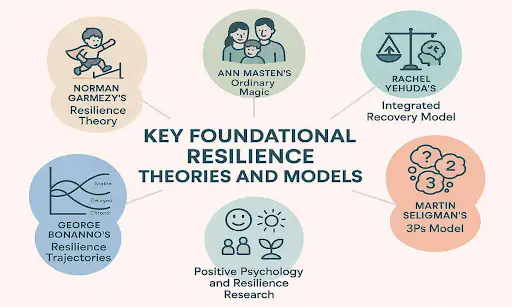
The modern scientific study of resilience did not begin with a theory. It began with a puzzle.
In the 1950s and 1960s, a group of developmental psychologists, including Emmy Werner at the University of California, Davis, began following a cohort of 698 children born in 1955 on the Hawaiian island of Kauai. The children were tracked from birth through their 30s and 40s — one of the most comprehensive longitudinal studies of child development ever conducted at that point. A third of the cohort had been classified as high-risk: they were born into poverty, experienced family instability, were exposed to parental mental illness or substance abuse, and faced multiple other significant adversities.
The expectation, based on the prevailing developmental psychology of the era, was that these children would show predictable patterns of impairment: educational failure, mental health difficulties, substance use, legal problems. The research was designed to document how adversity produced these outcomes.
What Werner found instead was that approximately a third of the high-risk children grew into competent, caring, confident young adults — without clinical intervention, without exceptional resources, and without any obvious explanation for why they had not followed the predicted trajectory. They had faced the same adversities as the children who did struggle. They had come from the same impoverished, destabilised environments. And yet they had, by every measure the research applied, flourished.
Werner’s subsequent investigation into what distinguished these children from their peers who had struggled produced findings that shaped the entire subsequent field of resilience research. The factors she identified were not primarily internal. They were relational. The children who had flourished had, reliably, at least one stable, caring relationship with an adult — not necessarily a parent, sometimes a grandparent, a teacher, an older sibling, a neighbour — who provided consistent emotional support and genuine interest in them as a person. They had, in most cases, opportunities to contribute meaningfully to their families and communities in ways that gave them a sense of competence and purpose. And they had social support structures — religious communities, youth organisations, extended family networks — that provided the scaffolding within which individual development could proceed.
What Werner had discovered was not a trait. It was a system.
Ann Masten at the University of Minnesota, who has spent more than four decades studying resilience and is among the most important researchers in the field, coined a phrase that is perhaps the single most consequential contribution to the scientific understanding of what the word actually means: “ordinary magic.”
Masten’s finding — replicated across populations, cultures, and types of adversity — is that resilience does not depend on extraordinary qualities in individuals. It depends on the ordinary, fundamental human processes and systems that, when intact, allow people to adapt successfully to adversity. These processes are: the functioning of basic biological regulatory systems (sleep, nutrition, physical health); the presence of close, responsive relationships with caregivers and other significant adults; cognitive and self-regulation skills that allow a person to manage their own emotions and behaviour; beliefs about the self and the world that support agency and meaning-making; and connections to community, cultural, and spiritual traditions that provide a sense of belonging and shared purpose.
None of these are exotic. None of them are the exclusive property of people with exceptional character. They are the ordinary prerequisites of human development — and what the research on resilience shows, with painful clarity, is that when adversity produces developmental damage, it does so primarily by disrupting or destroying these systems, not by exposing a character deficit in the person affected.
This is a profoundly different account of resilience from the one that popular culture has offered. The popular account says: some people are strong and some are weak, and the strong ones recover from difficulty while the weak ones do not, and the task of psychology is to help the weak become more like the strong. The research account says: all people have the capacity for recovery when the systems that support it are intact, and when people fail to recover it is most often because those systems have been disrupted — by poverty, by isolation, by trauma, by discrimination, by institutional failure — in ways that have nothing to do with their personal strength or weakness.
George Bonanno at Columbia University, who has conducted the most extensive research on adult resilience following bereavement and trauma, adds a further nuance that complicates even the research picture. His longitudinal studies found that the most common response to loss and adversity — in populations including bereaved spouses, survivors of serious illness, and people who experienced the September 11 attacks — was not the expected pattern of initial distress followed by gradual recovery. It was a trajectory of sustained functioning: the maintenance, from the outset, of relatively stable levels of psychological wellbeing through the adversity. Bonanno found this trajectory in approximately 35 to 65 per cent of the populations he studied — a proportion that, when first published, surprised many clinical researchers who had assumed that significant distress was the normative response to serious adversity.
His interpretation of this finding was not that these people were especially strong. It was that the human organism is, by default, more equipped for adaptive functioning in adversity than clinical psychology, with its focus on pathology and disorder, had previously recognised. Resilience, in Bonanno’s framework, is not the exception. It is the rule — the baseline expectation — and what requires explanation is not why some people are resilient but why, in some circumstances, the ordinary processes that support resilience break down.

The popular conception of resilience carries a set of specific myths that the research has consistently failed to support, and which cause genuine harm when they are applied — explicitly or implicitly — to the people who are struggling.
The first myth is that resilience means not being affected by adversity. Research by Richard Tedeschi and Lawrence Calhoun at the University of North Carolina, whose work on post-traumatic growth has become one of the most important bodies of research in positive psychology, is unambiguous on this point: genuine growth following adversity is not the absence of pain. It is the transformation of pain into new understanding, new relationships, and new purpose — a process that requires having been genuinely affected rather than having remained untouched. The person who claims to have been unbothered by serious adversity is not demonstrating resilience. They are either exceptionally fortunate in their neurobiological regulation, engaged in avoidant coping, or not being truthful. Resilience and suffering are not opposites. In the research, they are regularly coexistent.
The second myth is that resilience is a fixed trait — you either have it or you don’t, in more or less stable quantity, across all circumstances. The research consistently shows that resilience is context-specific and variable. A person may demonstrate remarkable resilience in the face of occupational adversity and significant difficulty in the face of relationship loss — not because they are strong in one domain and weak in another, but because the systems that support resilience are domain-specific and situationally dependent. The social support that helps a person recover from job loss may be absent when the adversity is the dissolution of their primary relationship. The coping strategies that serve a person through acute crisis may be inadequate for chronic stress. Resilience is not a character bank account from which withdrawals can be made in any currency. It is a set of dynamic, interacting processes that are highly sensitive to the specific features of the adversity encountered.
The third myth — and perhaps the most harmful in its practical consequences — is that the responsibility for resilience lies primarily with the individual. This myth is most visible in the corporate wellness culture that prescribes resilience training to employees experiencing burnout in organisations that are structurally overworking them. It is visible in the educational culture that teaches grit to students whose schools are under-resourced and whose teachers are exhausted. It is visible in the political discourse that attributes the psychological difficulties of economically marginalised communities to insufficient personal fortitude rather than to the material conditions that the research shows are among the most powerful determinants of whether the ordinary systems that support resilience remain intact.
The research on what actually builds resilience at the population level is not ambiguous on this point. Susan Luthar at Arizona State University, whose work on resilience in high-risk populations is among the most methodologically rigorous in the field, has consistently found that the interventions most likely to build resilience in children and adolescents are not those that target the individual’s internal qualities but those that strengthen the relational and social systems around them — particularly the wellbeing of the caregivers on whom children depend. You cannot build a resilient child by teaching the child to be resilient while leaving the child’s caregivers depleted, isolated, and unsupported. The system is the intervention.
The question of how a person maintains inner stability through difficulty — how they remain, in some fundamental sense, themselves when the external circumstances of their life are working against them — is not one that psychology invented. It is among the oldest questions that the Indian philosophical tradition addressed, and it addressed it with a sophistication that the contemporary research is, in many respects, confirming rather than surpassing.
The Bhagavad Gita’s concept of Sthitaprajna — the person of steady wisdom — is perhaps the tradition’s most direct engagement with what resilience, understood deeply, actually consists of. The Sthitaprajna is not the person who feels nothing. The Gita is explicit on this: such a person still experiences the full range of human emotion — joy, sorrow, desire, aversion — but is not enslaved by them. The steadiness is not the absence of feeling but the freedom from identification with feeling: the capacity to observe the arising and passing of emotional states without the state defining or directing the person. This is, in the language of contemporary clinical psychology, precisely the metacognitive awareness that the most robust resilience interventions — including Mindfulness-Based Cognitive Therapy and Acceptance and Commitment Therapy — are designed to develop.
Nishkama Karma — action without attachment to outcome, the Gita’s central practical teaching — addresses a dimension of resilience that the research literature approaches through the concepts of intrinsic motivation and psychological flexibility. The person whose sense of self is fused with their outcomes — whose identity rises and falls with success and failure — is constitutionally vulnerable to adversity in ways that the person who acts from genuine engagement rather than outcome-dependence is not. Carol Dweck’s growth mindset research demonstrates this empirically: the student whose self-worth is contingent on their performance is significantly less resilient in the face of failure than the student who is genuinely engaged in learning rather than in demonstrating ability. The Gita understood the psychological mechanism; Dweck measured it.
The Stoic tradition, which developed in parallel and engaged with remarkably similar questions, offers the concept of prohairesis — the sphere of what is genuinely within one’s control — as the foundation of psychological stability. Epictetus, who had been a slave, observed that external circumstances — health, wealth, reputation, other people’s behaviour — are not fully within one’s control, and that the person who bases their wellbeing on the maintenance of these things is, structurally, always at risk. What is within one’s control is how one responds, what one values, and what one chooses to attend to. This is not a counsel of passivity — the Stoics were deeply engaged with the world — but a precise description of the locus of psychological agency that both the Gita and contemporary resilience research identify as central to adaptive functioning.
Beyond the question of recovery — of returning to a prior level of functioning following adversity — the research has increasingly engaged with a phenomenon that the popular concept of resilience almost entirely ignores: the possibility that adversity can produce genuine growth, not merely restoration.
Richard Tedeschi and Lawrence Calhoun’s concept of post-traumatic growth describes the experience of positive psychological change that can emerge from the struggle with highly challenging life circumstances. They identified five domains in which this growth tends to manifest: new possibilities (the sense of having discovered new paths or purposes that were not visible before the adversity); relating to others (deeper, more genuine connection with other people, often accompanied by greater compassion and appreciation for relationships); personal strength (a paradoxical discovery of capabilities that the person did not know they possessed); spiritual change (the development or deepening of a spiritual or existential framework for making sense of experience); and appreciation for life (a more vivid, grateful engagement with ordinary experience).
The critical finding in Tedeschi and Calhoun’s research is that post-traumatic growth is not the same as resilience, and not the same as the absence of distress. It tends to emerge from the confrontation with what they call a “seismic event” — an adversity that challenges the person’s fundamental assumptions about the world, themselves, and their future in ways that cannot be accommodated within their existing framework. The person must, in some sense, be destabilised to grow. The shake-up is not the obstacle to growth. It is the condition of it.
This insight has profound implications for how we think about protecting people from difficulty. The research does not suggest that unnecessary suffering is beneficial. It suggests that the attempt to shield people from all significant adversity may deprive them of the very experiences through which the most important psychological development becomes possible. Viktor Frankl, observing from the extreme end of the adversity spectrum what human beings are capable of when stripped of everything external, arrived at a similar conclusion: that the last human freedom — the freedom to choose one’s response to any given circumstance — is precisely the freedom that adversity, if it does not destroy a person, has the paradoxical potential to reveal.
The research on what actually builds resilience — as opposed to what we wish built it — converges on a set of factors that are considerably more systemic and relational than the individual-focused prescriptions of the popular culture.
The most consistently evidenced factor is the quality of close relationships. Ann Masten’s cross-cultural research, Emmy Werner’s Kauai study, and the Harvard Adult Development Study all point to the same conclusion: the presence of at least one stable, genuinely caring relationship with another person is the single most powerful protective factor against the long-term psychological consequences of adversity. This is not about having many relationships. It is about having one — or a few — that are reliable, warm, and characterised by genuine interest in the person’s wellbeing.
The second is what researchers call “self-efficacy” — the belief that one’s actions can influence outcomes — which Albert Bandura at Stanford University demonstrated across decades of research to be among the strongest predictors of adaptive coping. This is not the same as optimism, which is a generalised expectation that things will work out. It is a more specific belief about one’s own agency — and it is built, the research shows, not through affirmation or encouragement but through the experience of mastery: of attempting difficult things, sometimes failing, and discovering that failure does not foreclose future attempts.
The third is what the positive psychology literature calls “meaning-making” — the capacity to construct a narrative account of adversity that places it within a broader framework of purpose and significance. Research by Crystal Park at the University of Connecticut on meaning-making as a coping process shows that the ability to integrate adversity into a coherent life narrative — to understand what happened, why it mattered, and how it connects to who one is and what one is doing — is significantly associated with better psychological outcomes following loss and trauma.
The Rekhi Foundation for Happiness builds each of these factors into the structure of its Science of Happiness Course, now offered at more than 50 universities across six countries. The course creates the community context in which genuine relationships form; it develops the competency and mastery experiences that build self-efficacy; and it provides the philosophical and scientific framework within which students can locate their own experience of difficulty within a larger understanding of what human flourishing requires and how adversity contributes to it. Resilience, in this framework, is not a module. It is the architecture of the entire curriculum.
The word resilience deserves to be reclaimed from the simplified, individualised, blame-adjacent version that has colonised its popular usage. It deserves to be returned to what the research has always shown it to be: not a superhuman capacity possessed by the exceptional but a human capacity supported by ordinary conditions — conditions that every person deserves access to and that every institution has a responsibility to cultivate.
The most resilient person in any room is not the one who has suffered the most and complained the least. They are, in all probability, the person who has had the most reliable support, the most consistent relationships, the most equitable access to the resources that the research shows make recovery possible. Their resilience is not a tribute to their character. It is a tribute to the systems that surrounded them — and a reminder, if one is needed, of what those systems owe to everyone else.
Resilience is ordinary magic. And ordinary magic, by definition, should be available to all.
The apparent variation in resilience across individuals is real, but its causes are almost entirely different from what popular culture suggests. The research, most comprehensively reviewed by Ann Masten at the University of Minnesota, shows that what looks like exceptional personal resilience is almost always a reflection of differential access to the ordinary conditions that support it. The person who appears remarkably resilient following significant adversity has, in virtually every case studied, access to one or more of the following: a stable, caring relationship with at least one person who is genuinely invested in their wellbeing; sufficient material security that the adversity does not simultaneously trigger cascading practical crises; a sense of self-efficacy built through prior experiences of successfully navigating difficulty; and a meaning framework — religious, philosophical, or cultural — within which the adversity can be integrated rather than experienced as purely random and senseless. When researchers control for these factors, the apparent individual differences in resilience shrink dramatically. What remains — genuine individual variation in the capacity to regulate emotion, to tolerate uncertainty, and to maintain functional engagement through difficulty — is real but substantially smaller than the popular conception of resilience as a personality trait would suggest. The practical implication is significant: rather than asking why some individuals are more resilient than others and trying to make the less resilient more like the more resilient through individual-focused interventions, the research suggests we should be asking what conditions are present in some environments and absent in others — and working to make those conditions universally available. Emotional wellbeing education, when it is embedded in the curriculum rather than offered as an individual supplement, is one mechanism through which this systemic approach becomes possible.
The distinction is important and frequently collapsed in popular discourse. Resilience, in the research literature, refers to the maintenance of relatively stable psychological functioning in the face of adversity — the ability to absorb difficulty without sustained impairment. Post-traumatic growth, as defined by Richard Tedeschi and Lawrence Calhoun at the University of North Carolina, refers to something qualitatively different: positive psychological change that emerges from the struggle with adversity, change that represents a genuine transformation rather than a return to a prior baseline. The two phenomena are related but distinct, and they tend to occur in different populations and under different conditions. Resilience is most associated with people whose adversity, while significant, does not fundamentally shatter their existing framework for understanding the world and themselves. Post-traumatic growth is most associated with people whose adversity does shatter that framework — for whom the experience is so destabilising that the prior self and the prior worldview cannot simply be restored, and something genuinely new must be constructed in their place. The distinction matters because conflating the two can lead to the expectation that people who experience serious, identity-destabilising adversity should simply recover — should bounce back to their prior state — when the research suggests that what is actually available to them, through sustained engagement with the meaning-making process, may be something more profound than recovery. It also matters because the conditions that support resilience and those that support post-traumatic growth overlap but are not identical: post-traumatic growth tends to require the additional element of genuine existential disruption and the willingness to sit with uncertainty long enough for new understanding to emerge.
The relationship between self-compassion and resilience is one of the most consistently evidenced connections in the positive psychology literature, and it is one that runs directly counter to the popular assumption that self-criticism is a driver of improvement and self-compassion is an obstacle to it. Kristin Neff at the University of Texas at Austin, whose foundational research on self-compassion has accumulated across two decades, consistently finds that self-compassion — the capacity to treat oneself with the same warmth and understanding one would extend to a good friend in difficulty — is significantly associated with greater psychological resilience, more consistent motivation following failure, and better emotional recovery from setbacks. Self-criticism, by contrast, activates the threat-response system: the same neurobiological alarm that responds to external danger responds to harsh self-evaluation, producing a state of physiological stress that impairs exactly the cognitive and emotional capacities — flexibility, creativity, perspective-taking — that resilience requires. The resilient response to failure, in the research, is not the steeling of oneself through self-criticism but the offering of self-compassion: the acknowledgement of difficulty, the recognition that suffering and failure are part of the shared human experience, and the extension of genuine kindness toward oneself in the moment of difficulty. This is not softness. It is, as Neff's research consistently shows, the response most likely to produce sustained engagement, genuine learning, and the motivation to try again. The Indian concept of Karuna — compassion as an active, engaged response to suffering — offers a culturally resonant framework for what Neff's laboratory measures: the orientation toward one's own difficulty that most supports the recovery and growth that resilience, at its deepest, actually describes.
The research evidence on this question is cautiously positive, with important qualifications. Resilience-building interventions have been studied extensively in children, adolescents, adults, and specific high-stress populations including military personnel, healthcare workers, and academic communities. The programmes with the strongest evidence base share several features that distinguish them from the less effective ones. They focus on skills rather than on attitude change: the teaching of specific cognitive and emotional regulation capacities — mindfulness, cognitive reappraisal, problem-solving, help-seeking — rather than the attempt to make people "think more positively." They are embedded in social contexts rather than delivered individually: group-based interventions consistently outperform individual ones, because the social dimension of resilience cannot be cultivated in isolation. They address the environmental and relational systems around the individual rather than only the individual themselves: the most effective school-based resilience programmes, as Susan Luthar's research shows, include components that support the wellbeing of teachers and parents, not just students. And they are sustained rather than one-off: a workshop is not a resilience intervention; a curriculum embedded in ongoing community life is. The Rekhi Foundation's Science of Happiness Course reflects these evidence-based principles: it is curriculum-embedded rather than supplementary, group-based rather than individual, sustained across a semester rather than delivered in a single session, and concerned with building the relational and meaning-making foundations of resilience alongside the specific cognitive and emotional skills. The research does not promise that resilience can be taught in the way that a foreign language or a technical skill can be taught — it is too embedded in relational and contextual factors for that. But it clearly supports the conclusion that the conditions for resilience can be deliberately cultivated, and that educational institutions are among the most powerful sites for doing so.
The cross-cultural research on resilience suggests both significant universals and important contextual variations — a picture that makes the uncritical import of Western resilience frameworks into Indian contexts neither necessary nor appropriate, but also makes the wholesale rejection of the cross-cultural evidence unjustified. The universals are robust: the centrality of close, stable relationships to resilience outcomes appears across every cultural context studied; the importance of self-efficacy and meaning-making is consistent across the populations examined; and the finding that resilience is relational and systemic rather than purely individual holds across cultures with very different conceptions of the self. The contextual variations are equally real and equally important. Indian cultural contexts tend to embed the individual in relational and familial structures that are, in some respects, more resilience-supportive by default than the individualistic cultural contexts in which much of the Western research was conducted — the joint family system, for example, provides a form of built-in social support that the nuclear family structures of Western contexts do not. At the same time, the specific stressors that Indian contexts generate — the academic pressure of competitive examination systems, the caste and gender dynamics that shape access to the conditions supporting resilience, the urban migration that disrupts traditional community structures — require culturally specific analysis rather than the direct application of Western frameworks. The Indian philosophical tradition's own resources for understanding resilience — the Sthitaprajna of the Bhagavad Gita, the Stoic-adjacent teachings of the Yoga Sutras, the Buddhist emphasis on impermanence and equanimity — offer frameworks that are both culturally resonant and, the research increasingly suggests, psychologically sophisticated. The Science of Happiness Course as taught by the Rekhi Foundation deliberately integrates these traditions with the contemporary research precisely because the most robust resilience education is one that speaks to students in the language of their own cultural inheritance, not one that asks them to adopt a foreign framework wholesale.

Rekhi Foundation, founded in 2016, promotes Happiness Science via university centers, collaborating globally across six countries.
Table of Contents
6/79, S/F, Gurudwara Road, Karol Bagh, New Delhi – 110005, INDIA
2051, Last Chance Court, Gold River, CA 95670, USA